A final score graphic tells everyone who missed the match how it ended: the score, both clubs, your scorers with minutes and a clear “Full Time” label, all in your club’s colours. Post one for every result (wins, draws and defeats) the moment the whistle goes. The fastest way to do that every week is SportGraphics, where designer-built full-time templates fill themselves in with your saved club branding.
Below: the checklist, ten ideas, how to handle a win, a draw and a defeat, timing, sizes, captions you can adapt, and the quickest way to do it all from the touchline.
What every full-time graphic needs
Whether you call it a final score or a full-time post, and whether your club says football or soccer, the checklist is the same:
- The score, as the biggest thing on it. If it isn’t legible at thumbnail size on a phone, the graphic has failed at its one job.
- Both clubs, named, with crests. The other side’s fans share results too.
- Home or away, made clear. The traditional order is home team first. If your design always puts your own club first, say “away at [Ground]” in the caption so nobody misreads the result.
- A clear FT label. “Full Time”, or “After extra time” with the penalty score in brackets when it went further.
- Scorers with minutes. “Patel 23’, Reid 71’” under your score, and the opposition’s under theirs.
- The competition. League, cup round or friendly, in one line of small type.
- Your branding. The exact club colours, crest and fonts you always use, so the post is recognisably yours before anyone reads it.
- Optional: one stat line. Only if it tells a story: “Unbeaten in six”, “Third clean sheet in a row”, “Up to 4th”. One line, not a data table.
Leave off the match report, every stat you tracked, and anything you’re unsure of: a corrected result graphic looks worse than one posted two minutes later.
10 final score graphic ideas (and when to use each)
The first three are the everyday football score graphic formats, and they’re the three designs in our match result graphic templates. The other seven are story-led twists for results that deserve more than the standard board.
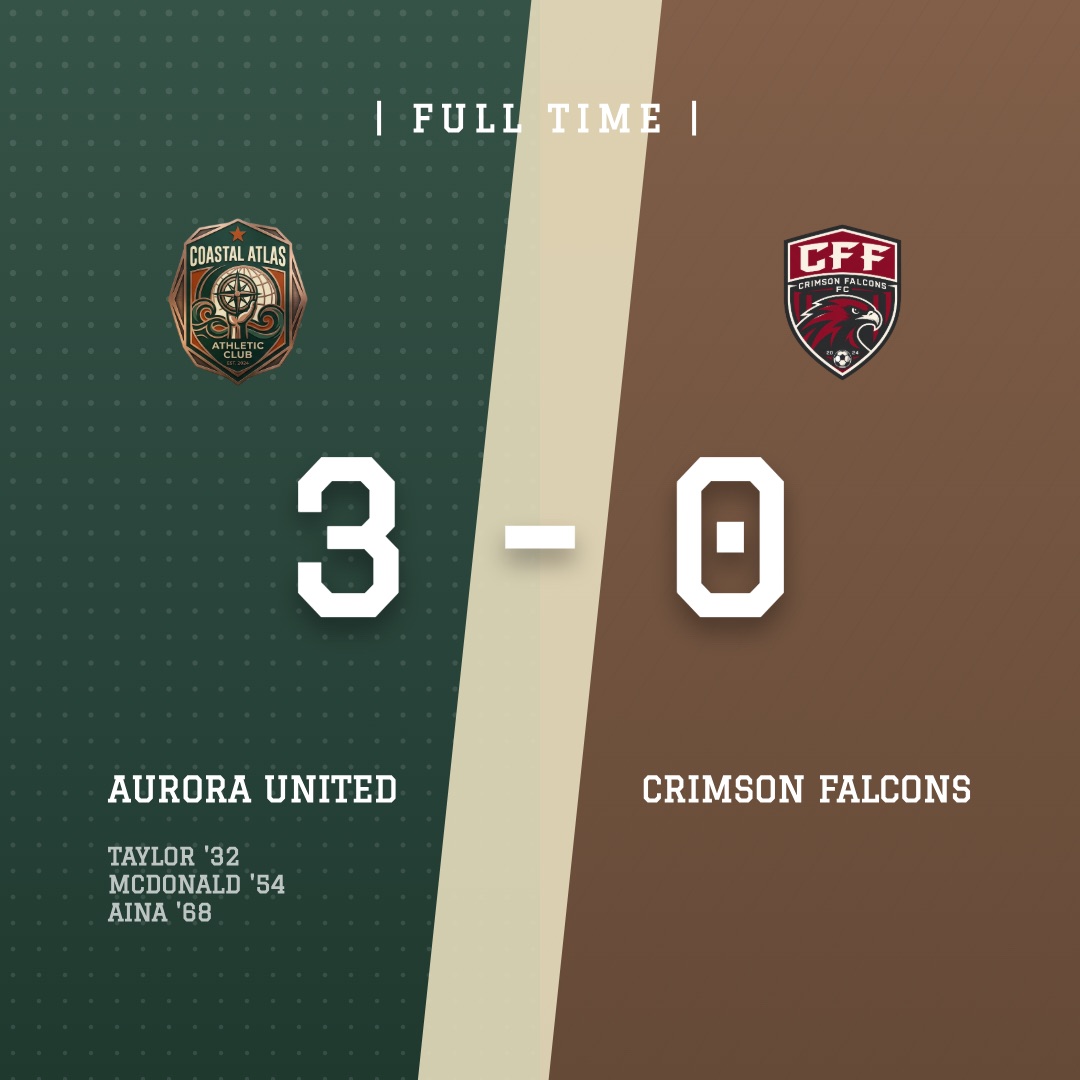
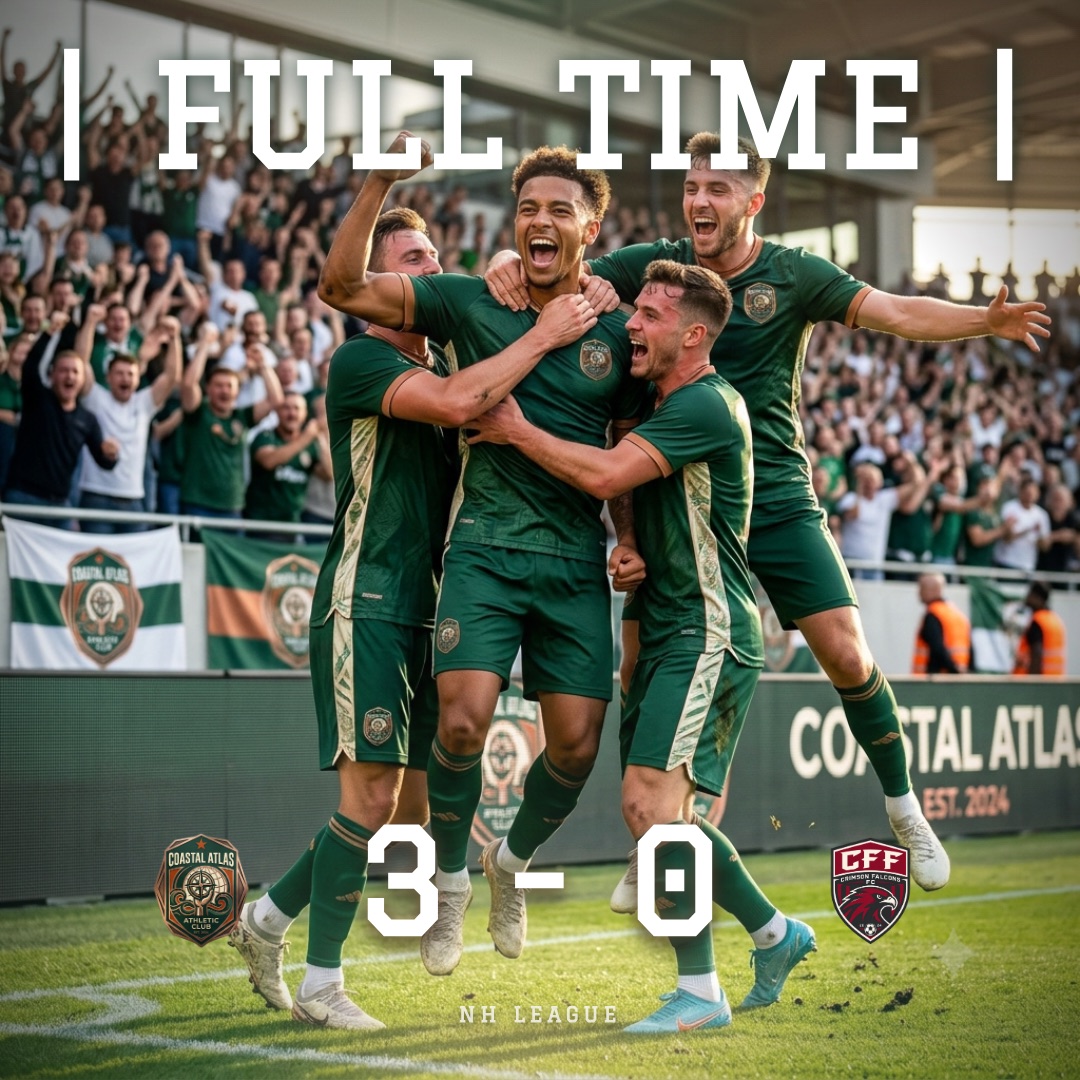
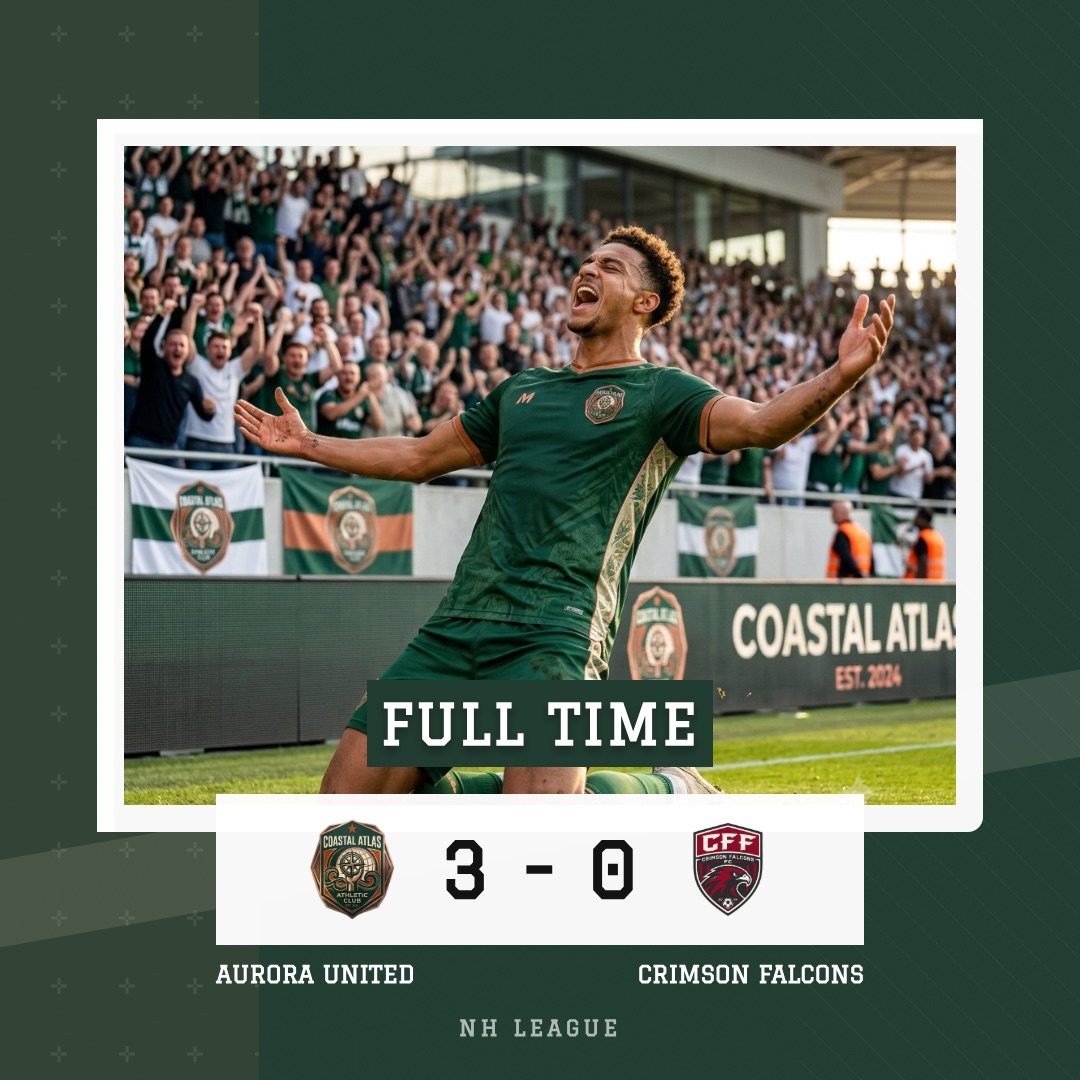
1. The classic split score
The scoreline splits the frame between the two clubs, with the scorers listed underneath, so one glance tells the whole story. When to use it: every match, as the first thing you post at the whistle. It’s the layout behind our Split Score full-time design.
2. The standout-player poster
An editorial poster that hands the result to one player: the match-winner, the hat-trick scorer, the keeper who kept you in it. When to use it: as a second post after the standard board, when the result has an obvious hero. See the Player Poster result template.
3. The framed match photo
A real photo from the game (the celebration, the huddle, the touchline) framed with the final score. When to use it: whenever someone at the club takes photos at matches. It’s the most personal result format and the one that ages best in your feed. The Match Photo design is built for it.
4. The goal-by-goal carousel
Slide one is the full-time board; each slide after it is a goal graphic from the match. When to use it: high-scoring wins, or any game where the goals deserve a second look. If you posted goal announcement graphics live, the carousel costs you nothing, because the slides already exist.
5. The big-win and derby treatment
Local rivalry, a top-of-the-table clash, a result nobody saw coming: turn the volume up. Lead with the animated version and let the caption have a bit of swagger. When to use it: a handful of times a season, or it stops meaning anything. Celebrate your team rather than mocking theirs, because both sets of fans will screenshot it.
6. Cup progress: “into the next round”
In a knockout tie the score is half the story; the other half is what comes next. Add a line such as “Into Round 3” or “Semi-finals, here we come”, then follow up with the draw when it’s made. When to use it: every cup win. If it went to penalties, show the shoot-out score too, or the comments will ask.
7. The clean sheet
Most result graphics celebrate the scorers; this one celebrates the keeper and the back line. When to use it: 1–0s and 0–0s where the defending was the story. Feature the goalkeeper or the back four with a simple “Clean sheet” line.
8. The comeback
Two down at half-time and won 3–2? Say so. One line (“From 2–0 down”) turns a scoreline into a story, and the scorer minutes on the graphic prove it. When to use it: only when it genuinely happened.
9. The milestone win
First win of the season, a new team’s first ever victory, a manager’s 100th game in charge. When to use it: whenever the result means more than three points. Check the number with whoever keeps the records, because milestone claims get fact-checked in the comments.
10. The season-record update
The result plus where it leaves you: “Played 8, won 6”, “Unbeaten in five”, “Up to 3rd”. When to use it: mid-season, when form is the story. Keep it to one line and make sure it’s current; a stale table is worse than none.
Most of these twists are one extra line of text. Put it in the caption or, on SportGraphics Pro, add it to the graphic itself with the Canva-style manual editor, which lets you fine-tune any design.
How to post a win, a draw and a defeat
The graphic should look the same whatever the result, because that consistency is the point. What changes is the tone of the caption around it.
After a win
Celebrate the team, credit the scorers and thank whoever turned up to watch. Keep it proportionate: a 1–0 league win isn’t a cup final, and followers can tell when a club is overdoing it. End by pointing at the next game.
After a draw
Find the real story. A late equaliser is a point won; a lead let slip is two points dropped, and your followers know which. Pick the honest angle (the keeper who kept you level, a young player’s first goal) and don’t dress up a frustrating draw as a triumph.
After a defeat
- Always post it. A feed that only shows wins looks like it’s hiding the losses, and players, parents and supporters notice.
- Same design, same timing. Post it at the whistle with the graphic you’d use for a win.
- Credit the opponent. “Congratulations to [Opponent]” costs nothing and reads as class.
- No excuses. Leave the referee, the pitch and the weather out of it.
- Find one genuine positive if there is one: a debut, a first goal, a strong second half.
- Point to the next fixture. “Back at home on Saturday” moves everyone on.
When to post your full-time graphic
At the whistle. The result post is a moment, not a report: people who couldn’t make it check your feed in the minutes after full time, and a graphic that lands on Sunday evening is old news. It closes the matchday cycle covered in our guide to making matchday graphics.
- Within minutes of the whistle: the standard full-time graphic, as a feed post and a story.
- Later that day: the player poster or match photo, once you’ve picked the best image.
- The next day: the goal carousel or a season-record update, then the next fixture.
One habit makes the first post easy: with ten minutes left, open your result design and fill in what you already know (the scorers so far, the score as it stands). At the whistle you’re changing one or two details, not starting from scratch.
Result graphic sizes and formats
| Format | Size | Best for |
|---|---|---|
| Feed post | 1080×1080 (1:1) | Instagram, Facebook and X feeds: the result of record |
| Story | 1080×1920 (9:16) | Instagram and Facebook stories, WhatsApp status |
| Animated MP4 | Either size | Stories, reels and the big results |
Make both sizes rather than dropping the square version into a story with empty space around it. The square image is also the one to share in the players’ and parents’ WhatsApp groups. For derbies, cup runs and comebacks, lead with the animated MP4: motion gives a big result a sense of occasion.
Full-time caption examples for every result
The graphic carries the facts, so the caption can be short. Swap in your own names and keep the tone.
Wins
- “Three points at home. Goals from [Scorer] and [Scorer] get the job done. Thanks for the noise today.”
- “Derby day, and the bragging rights stay with us. Proud of every one of them.”
Draws
- “A point on the road, and [Scorer]’s late equaliser keeps the unbeaten run going.”
- “Honours even. Not the result we wanted after leading at the break, but plenty to build on.”
Defeats
- “Not our day. Congratulations to [Opponent] on a deserved win. We go again on Saturday.”
- “Full time. Well played, [Opponent]. We’ll learn from this one.”
Need more? We wrote 150 football Instagram captions for club accounts, covering wins, draws and defeats plus the rest of the matchday cycle.
How to make a full-time graphic with SportGraphics
Here’s how the result post fits into a SportGraphics matchday:
- Set up your club once. Colours, crest, fonts and your roster with names, numbers and photos. The profile is shared, so the branding doesn’t live on one volunteer’s laptop.
- Post the build-up and the goals. A matchday graphic before kickoff (here are 15 matchday graphic ideas), then a goal graphic as each one goes in: pick the scorer, type the minute, export. Each takes under a minute from a phone at the touchline. Keep a running note of scorers and minutes and your full-time list is written before the whistle.
- Pick the result design. Split Score for the everyday board, Player Poster for the hero, Match Photo when you have a great image. Your branding fills in by itself.
- Enter the score. Add your scorers on Split Score, or your photo on Player Poster and Match Photo.
- Export and post. A PNG or an animated MP4, 1:1 for the feed and 9:16 for stories, before the players are off the pitch.
Every design in our full time graphic templates is included on Basic ($9/mo or $90/yr, with 8 images + 8 videos every month) and Pro ($15/mo, with unlimited exports, AI features and sponsor logos on every graphic), watermark-free and with an animated MP4 version. The free plan (1 watermarked image export, goal and matchday designs, no credit card) lets you see your own club in a finished design first. Compare SportGraphics plans and pricing.
Why not Canva or a designer?
Canva can make a good result graphic, and it’s still the right tool for one-off posters, print and sponsor decks. The trouble is the weekly repeat: duplicating last week’s file, swapping the crest and every name, re-checking the colours and animating it yourself, every match. (We compared the two properly in SportGraphics vs Canva.) A designer has the highest ceiling, but turnaround means the result goes out hours late. A dedicated club tool wins the weekly cycle, and SportGraphics is the only app in our comparison of football graphics apps where every design ships with a built-in animated MP4 version. One honest limit: it’s built for soccer/football only today, with more sports planned.
Frequently asked
The final score as the biggest element, both clubs with their crests, a clear full-time label, your scorers with minutes, the competition, and your club's exact colours and crest. A single stat line (“unbeaten in five”, “third clean sheet in a row”) is a good extra when it tells the story. Leave off anything you'd have to correct later.
For football clubs, SportGraphics. Save your club once (colours, crest, fonts, roster) and its full-time designs (Split Score, Player Poster and Match Photo) fill themselves in with your branding, ready to export as a 1080×1080 feed post, a 1080×1920 story or an animated MP4, from a phone at the touchline. Result designs are on Basic from $9/mo. Canva is still a good choice for one-off posters and print.
Yes, every time, with the same design and at the same time you'd post a win. Keep the caption respectful: credit the opponent, skip the excuses, mention a genuine positive if there is one, and point to the next fixture. A feed that only shows wins looks like it's hiding the losses.
1080×1080 (1:1) for feed posts on Instagram, Facebook and X, and 1080×1920 (9:16) for stories. Make both rather than stretching one into the other. Every SportGraphics design exports in both sizes, as a PNG image or an animated MP4.
SportGraphics' free plan covers goal and matchday graphics (1 watermarked image export, no credit card), so you can see your own club in a finished design at no cost. Full-time result designs unlock on Basic at $9/mo or $90/yr, which also removes the watermark and adds animated MP4 export.